
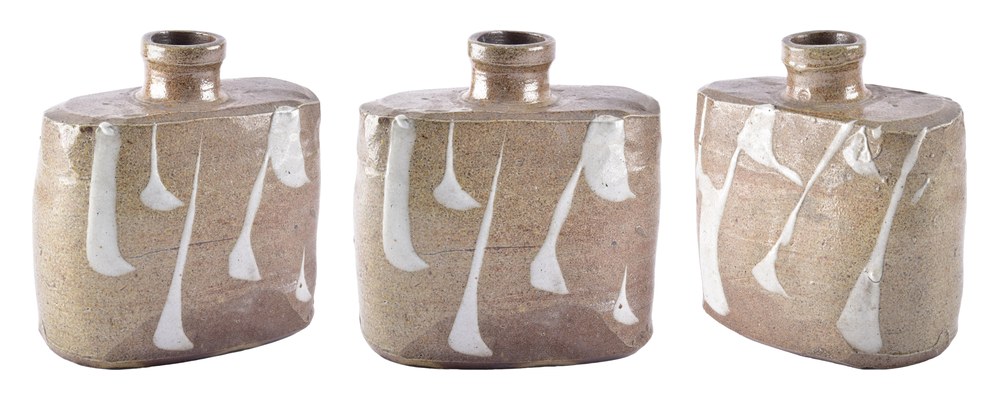
Few potters of the twentieth century are as widely admired as Shoji Hamada, and fewer still have had such a lasting influence on the pots made in this country. A stoneware vase by Hamada is among the highlights of our auction on Thursday 26th November 2026, which gives us a welcome reason to look at the man, his work and why collectors in Britain, Japan and America still compete for it.
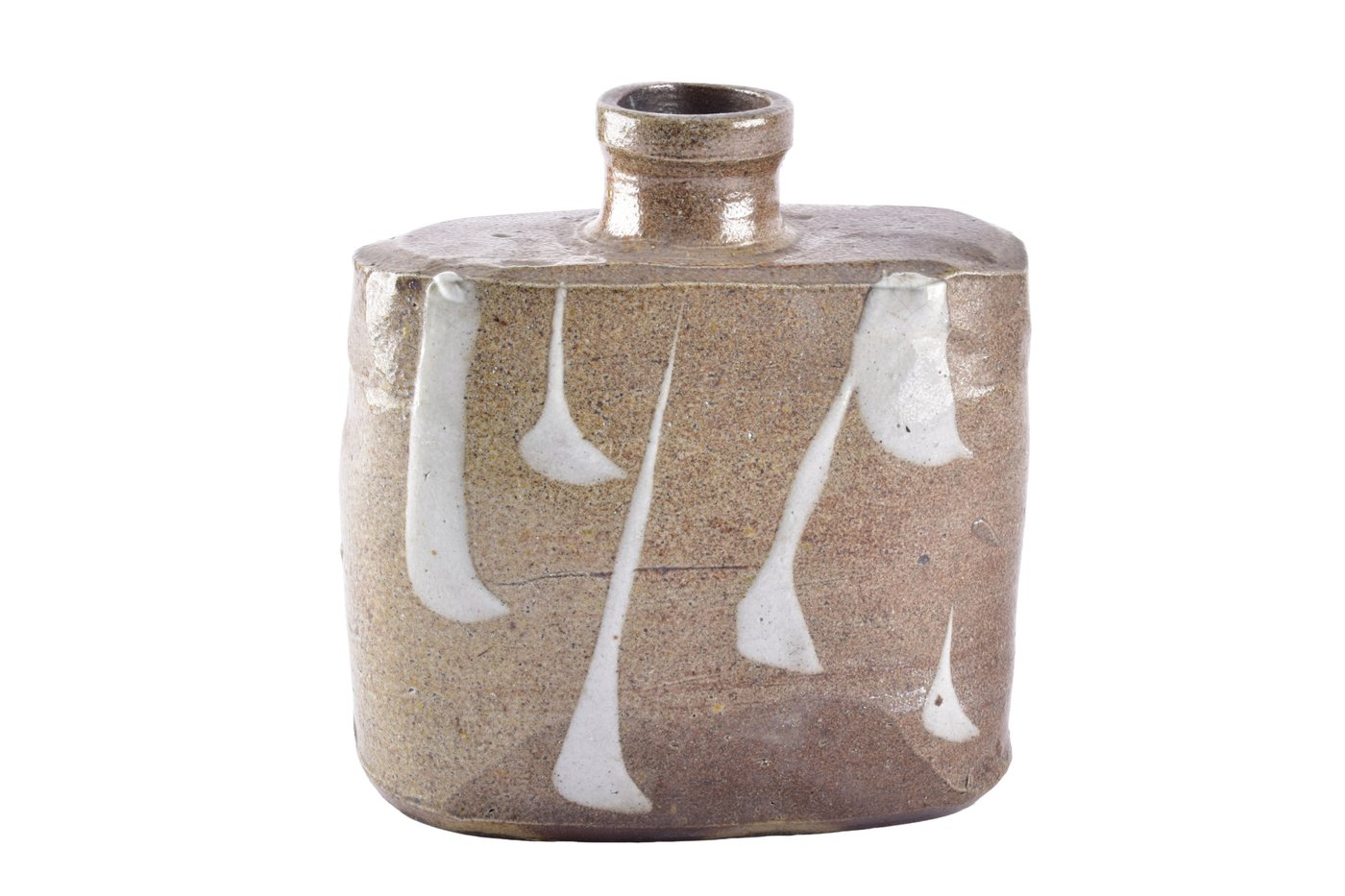
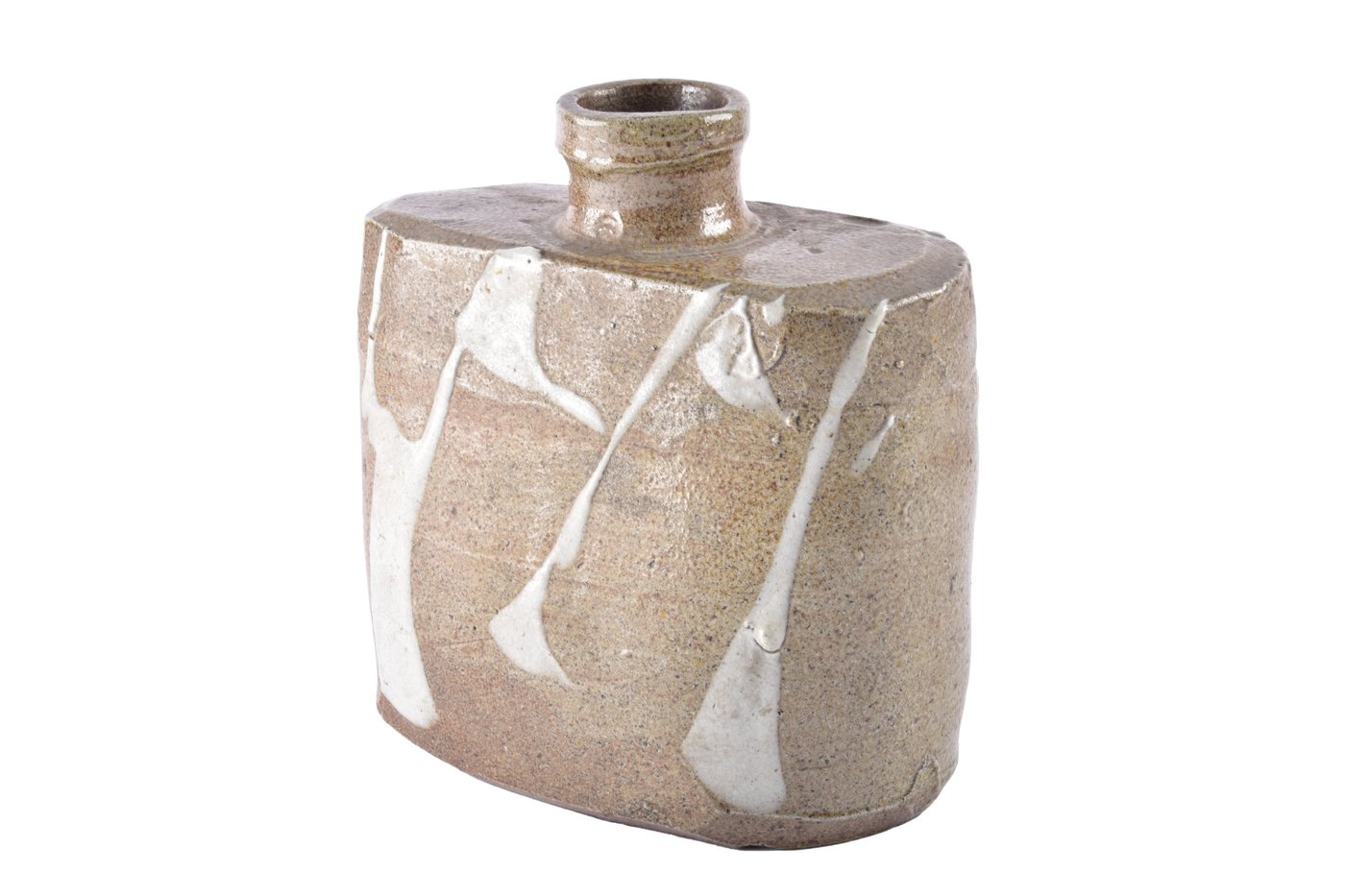
The vase dates from the 1960s, when Hamada was at the height of his reputation. Of flattened rectangular form, with rounded shoulders and a short cylindrical neck, it is decorated with bold abstract motifs in white slip against a mottled brown and grey salt glazed ground, and stands 20.5 cm high. It carries an estimate of £2,000-3,000.
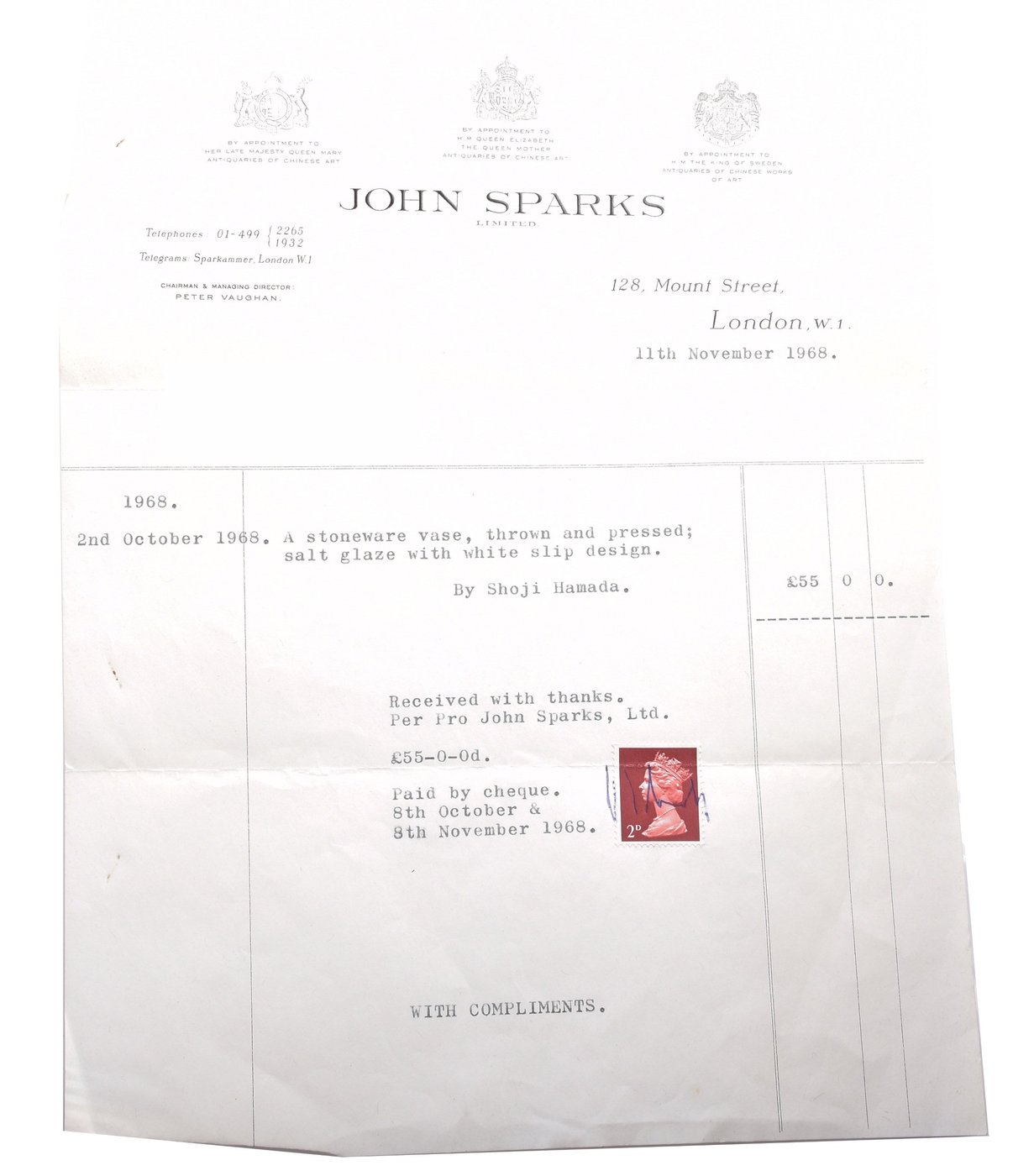
Its history is as appealing as the pot itself. It was bought from John Sparks Ltd of 128 Mount Street, London, on 2nd October 1968 for £55, and it comes to auction with the original invoice, dated 11th November 1968. As we explain below, paperwork of that kind is exactly what collectors of Hamada hope to find.
Hamada was born in 1894 in Kawasaki, just outside Tokyo. He decided as a teenager that he would be a potter, studied ceramics at technical college in Tokyo, and then spent several years testing glazes at the ceramic research institute in Kyoto. It was a scientific training, and it gave him a command of clay and fire that he spent the rest of his life wearing very lightly.
In 1920 he sailed for England with Bernard Leach. The two men settled in St Ives, built a Japanese climbing kiln and founded the Leach Pottery, now regarded as the cradle of British studio pottery. Leach supplied the vision, Hamada much of the technical knowledge. He stayed for three years, exhibited in London to real acclaim, and then went home.
He could have set up in Tokyo or Kyoto. Instead he chose Mashiko, a working pottery village north of the capital that made plain kitchen wares for local households. With the philosopher Soetsu Yanagi and his friend and fellow potter Kanjiro Kawai, Hamada became a leading voice of the mingei movement, the belief that true beauty lies in honest, useful things made by hand.
He practised what he preached. His clay was dug locally, and his glazes came from crushed local stone, wood ash and rice husk. He threw on a hand turned wheel and fired with wood. In 1955 he was named among Japan's first Living National Treasures, and in 1968 he received the Order of Culture. He died at Mashiko in 1978, and it is largely thanks to him that the village is known to potters all over the world.
Hamada's pots are sturdy, generous and unfussy. The forms most often seen at auction are square or rectangular bottle vases made in a press mould, vases with cut sides, large dishes, tea bowls and the small handleless cups known as yunomi.
The glazes are a short and familiar list: a glossy black called tenmoku, a rust brown known as kaki or persimmon, a creamy white made from rice husk ash, soft greens and greys, and in his later years the mottled, lightly pitted surface of salt glaze. Decoration is quick and confident. Look for wax resist patterns, a brushed motif based on sugar cane that he brought back from Okinawa, and looping trails of glaze poured from a ladle in a matter of seconds.
Here is the point that catches people out. After leaving St Ives, Hamada stopped marking his pots. He believed good work should speak for itself. A genuine Hamada will therefore have no signature or seal on the base.
Instead, each piece was sold in a fitted wooden box that he inscribed and sealed himself. Since his death, his son Shinsaku and grandson Tomoo have certified boxes for pieces that had lost theirs. That box matters a great deal to value, so it should never be thrown away, however plain it looks.
Many of the Hamada pots in British homes were bought at his London exhibitions, from London dealers, or brought back from Japan, and plenty have been separated from their boxes over the years. In those cases an old receipt, an exhibition label or a family account of where the piece was bought can make all the difference. The 1968 invoice that accompanies our vase is a perfect example. Mashiko also produced, and still produces, a great many pots in his manner, which is why auction catalogues distinguish carefully between works by Hamada, those attributed to him and those in his style.
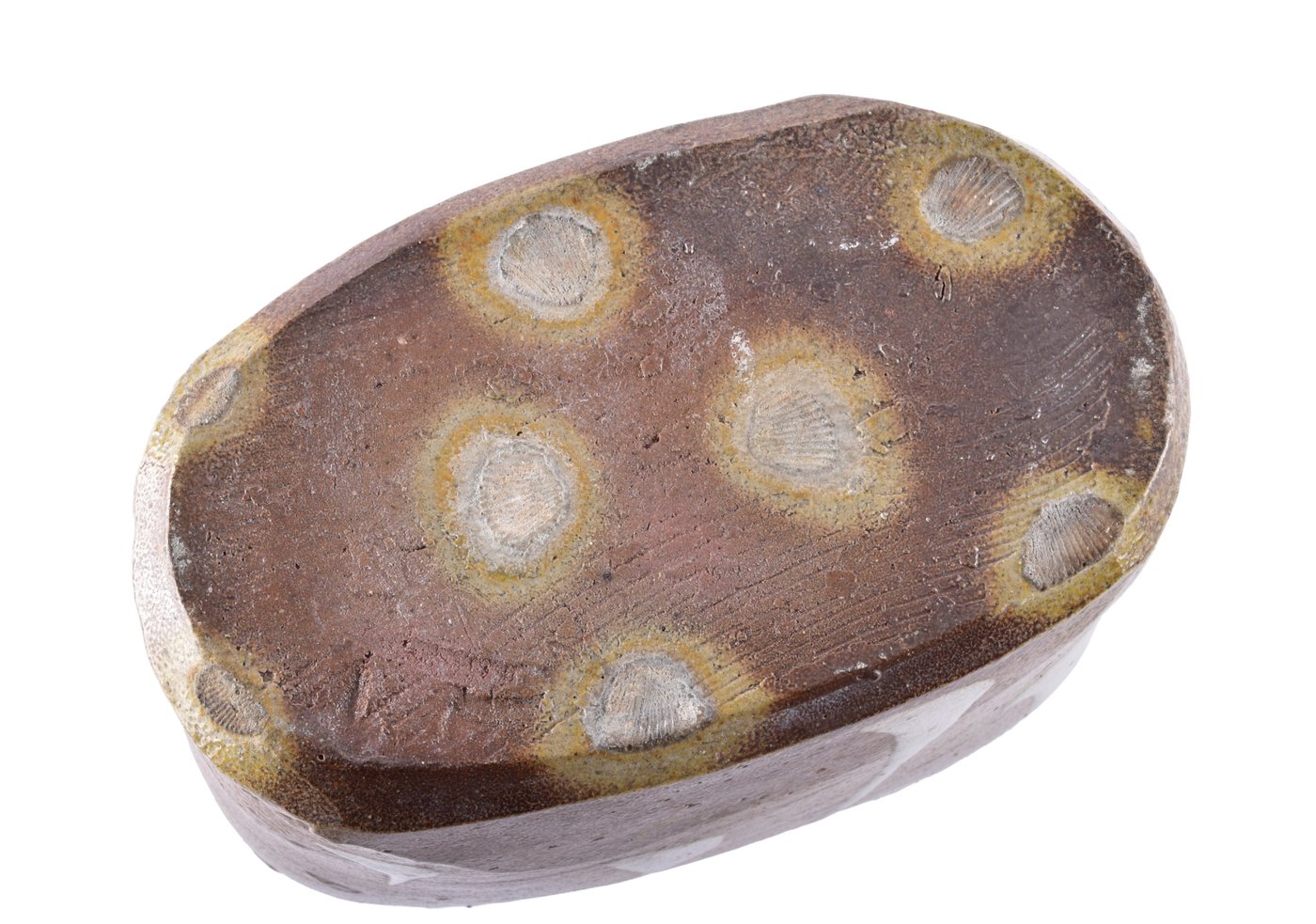
Prices depend on form, glaze, size, condition and above all on documentation. Small cups and dishes can be bought for a few hundred pounds. Good vases and bottles generally sell in the low thousands and can comfortably outrun their estimates. One tenmoku glazed vase offered in London in 2019 carried an estimate of £1,000-2,000 and realised £4,750. The finest large dishes and the best documented pieces go higher again.
Because his pots are unsigned and modest in appearance, they are easily overlooked. We regularly see studio pottery of real value passed over during a house clearance or left out of a house contents valuation because nobody recognised it. If you have a piece you believe may be by Hamada, by Bernard Leach or by another of the great studio potters, our specialists would be delighted to see it.
Valuations are free and without obligation. Send us photographs, including the base and any box or paperwork, to info@aubreys.com, telephone our Guildford saleroom on 01483 963250, or request a free valuation online.
